Categories
In-depth Introduction to the Visual Positioning Function of UV Printers
Visual positioning is an intelligent alignment system for modern UV flatbed printers. Powered by industrial cameras and image algorithms, it automatically detects workpiece positions and rotation offsets, and compensates the printing path dynamically. It removes reliance on jigs and manual positioning, cuts setup time, improves registration precision and yield, and is ideal for small-batch, customized and multi-piece mixed printing.
Oct 26th,2026
84 Views
Visual positioning, also known as vision alignment, is a machine vision-based positioning solution tailored for UV inkjet printing. Its core hardware consists of high-resolution industrial cameras, auxiliary light sources and data transmission modules, while the software side contains pattern matching, edge detection and coordinate transformation algorithms integrated into the printer control system.
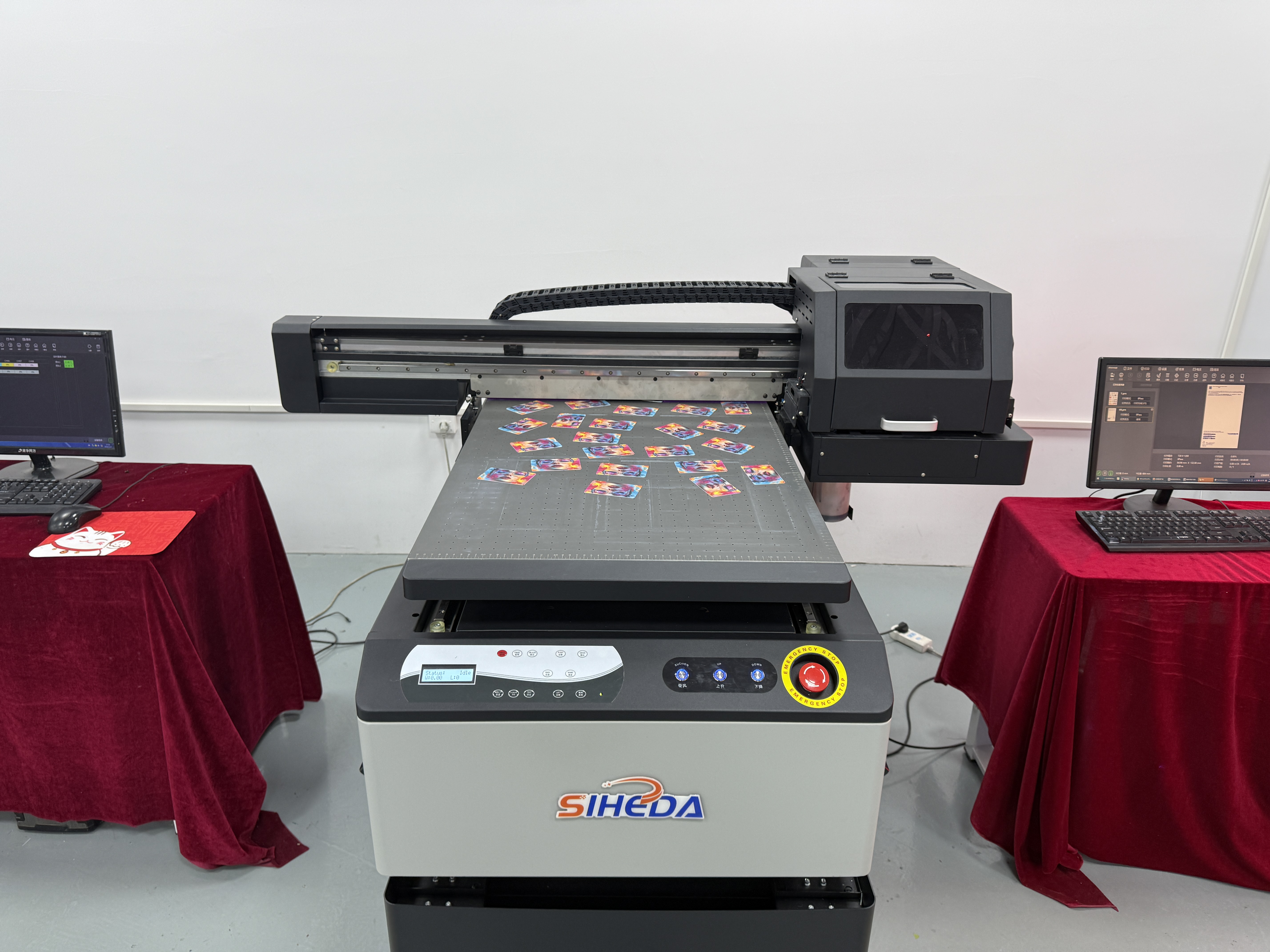
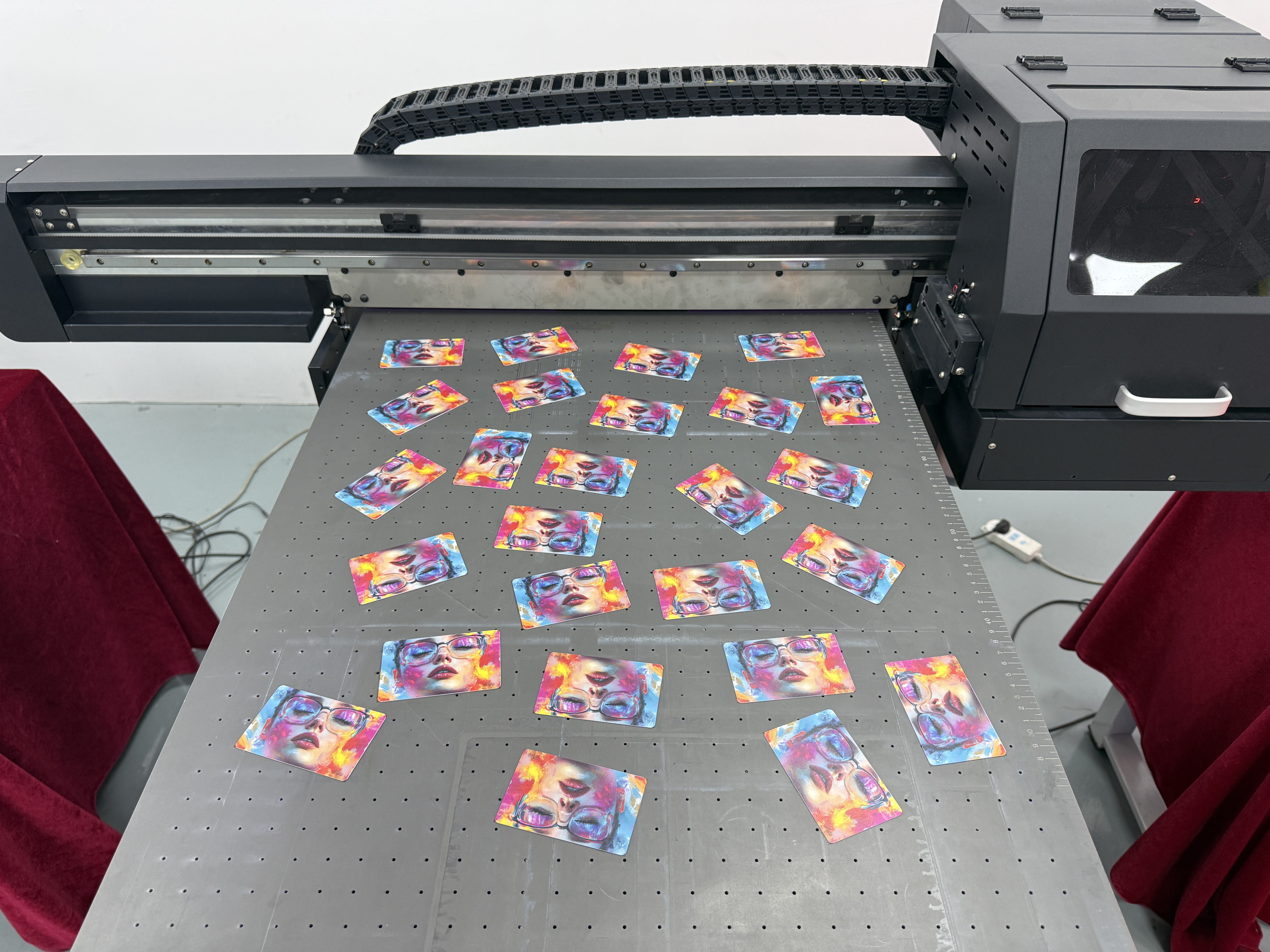 The working flow can be divided into four steps. First, scanning and capturing: after the workpiece is placed freely on the print bed, the camera moves with the carriage or shoots the whole platform to acquire clear surface images. Second, feature extraction: the system extracts object outlines, preset fiducial marks or unique feature points from the captured image. Third, data calculation: the software compares the actual position and angle of the substrate with the original digital artwork, computes X-axis offset, Y-axis offset and rotation deviation. Fourth, path compensation: the control system automatically remaps the print file and adjusts the movement track of the printhead, so that the pattern can be accurately printed on the target area of the workpiece.One of the most prominent advantages of this function is jigless printing. In traditional UV printing production, operators need to make customized jigs for each product model to ensure consistent placement, which costs a lot of time and labor for frequent order changes and multi-variety small-batch production. With visual positioning, operators can scatter multiple workpieces of the same or different shapes on the platform at will. The system identifies each target separately and distributes the corresponding printing content, which supports mixed batch printing and significantly improves the utilization rate of the printing bed.
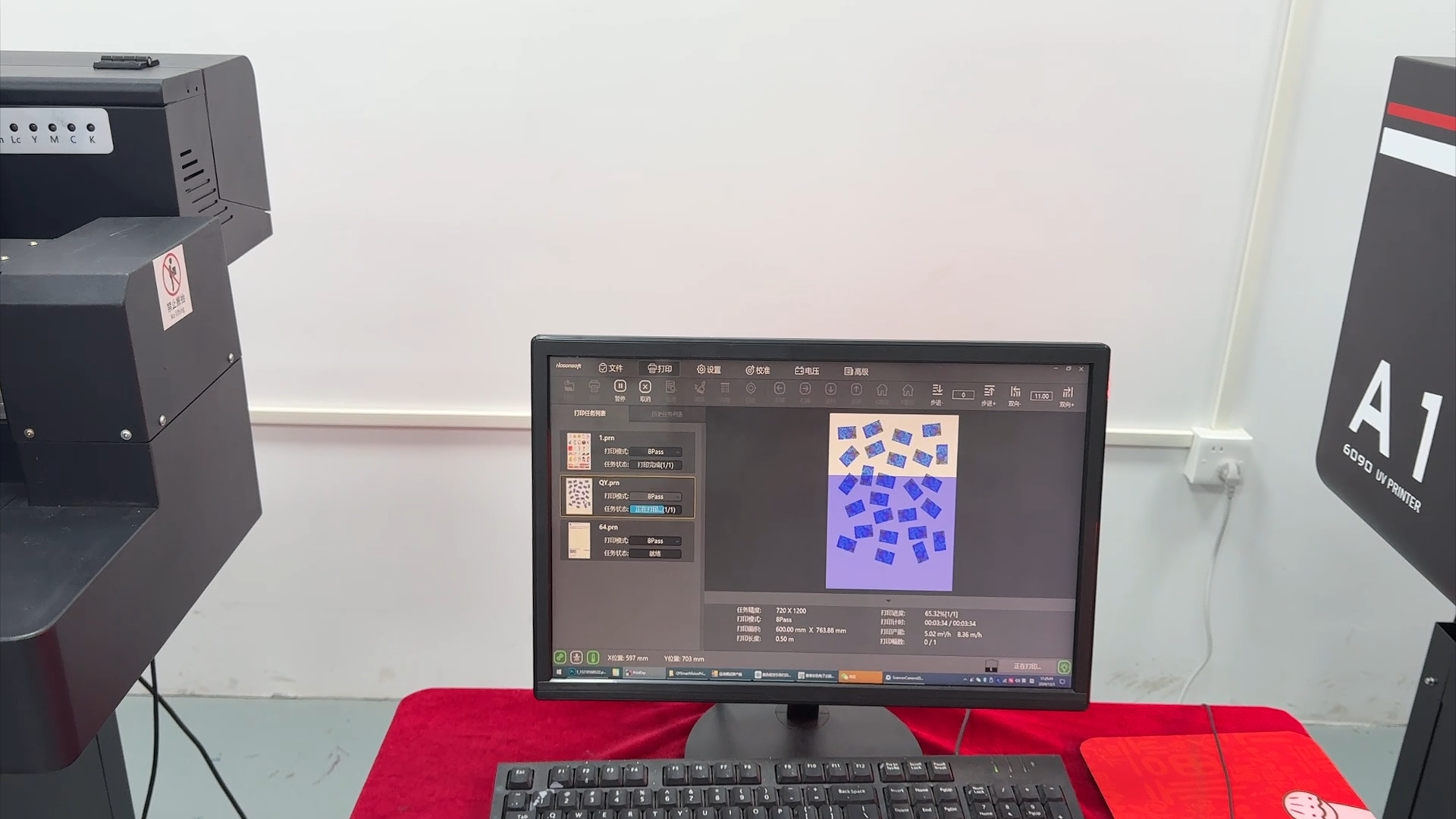 Precision performance is another key advantage. Mature visual positioning systems can achieve sub-millimeter or even higher registration accuracy. It effectively solves common quality problems such as pattern shifting, color misregistration and pattern skewing caused by manual placement errors, slight substrate displacement and operation errors. For applications with strict requirements such as logo printing, decorative pattern printing and personalized gift customization, stable visual positioning directly raises the finished product yield and reduces material waste.Besides conventional flat substrates, the visual positioning system also adapts to many special application scenarios. It can identify special marking points on slightly curved workpieces, thin fragile materials and shaped blanks that are difficult to fix with jigs. Combined with the height measurement function, it can also cooperate with the printer’s automatic height sensing module to maintain a stable nozzle-to-material distance while ensuring accurate pattern alignment.It is worth noting that the stable operation of visual positioning is affected by several factors. Uniform and stable auxiliary lighting helps avoid reflection, shadow and overexposure interference on transparent, metal and glossy materials. Regular camera calibration, cleaning of the lens and platform, and reasonable setting of recognition tolerance can keep the recognition success rate and positioning accuracy stable in long-time continuous production.In the industrial digital printing industry, visual positioning is no longer an optional luxury function. It lowers the technical threshold for operators, accelerates order switching, and matches the market trend of personalized customization and diversified orders. UV printers equipped with mature visual positioning systems have stronger competitiveness in promotional goods, advertising signs, electronic accessories, craft gifts and other printing markets.