Categories
How to Calculate the Printing Cost of One T-shirt with DTF Printer
Many print shops fail to quote correctly after buying a DTF printer due to inaccurate cost calculation. This article breaks down the full cost structure of DTF heat transfer printing, including PET film, ink, hot melt powder, labor, machine depreciation and wastage. It comes with practical formulas and real cases to help you figure out true costs quickly, set proper prices and protect your profit margin.
Nov 9th,2026
24 Views
For many business owners who just invested in DTF white ink heat transfer printers, cost calculation is one of the biggest challenges. A lot of them only count basic consumables such as ink and film, while ignoring hidden costs like wastage, labor and equipment depreciation. This usually leads to two bad results: quoting too high and losing clients, or accepting orders at low prices with no profit. Standardized cost calculation logic is essential for stable DTF printing business.The total cost of one DTF printed T-shirt falls into three categories: direct heat transfer consumable cost, additional production cost, and blank garment cost. Consumables are the core variable.First, direct consumables cover PET release film, CMYK color ink, white ink and hot melt powder. White ink normally takes the largest share of DTF printing cost. You can check the ink consumption of the design via RIP software, then calculate ink cost based on ink unit price. Do not calculate PET film only by the theoretical pattern area; space for layout trimming and gaps should be reserved. Hot melt powder cost heavily depends on powder recycling efficiency. Workshops with poor powder recycling will face much higher powder waste. A wastage factor of 8%–15% is recommended for regular production to cover test prints, clogged head cleaning, defective sheets and wrong prints.
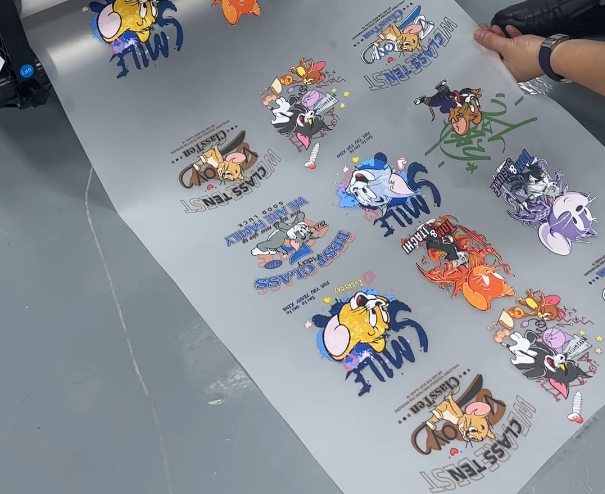 Second, additional production costs are easily overlooked. This includes electricity for the printer, powder shaker and dryer, heat press machine, labor cost allocated by hourly output, machine depreciation of the whole DTF line (printer + powder shaker dryer), spare parts & maintenance, workshop rent and packing supplies.Third, blank T-shirt cost. If you sell finished printed T-shirts, blank garment cost must be added. If you only supply transfer film for clients, this part is excluded.General formula for your reference:Cost of one DTF transfer print = (PET film cost + ink cost + hot melt powder cost) × wastage factor + allocated electricity cost per piece + labor cost per piece + machine depreciation per piece + other overhead per pieceTotal cost of finished printed T-shirt = cost of one transfer print + blank T-shirt cost
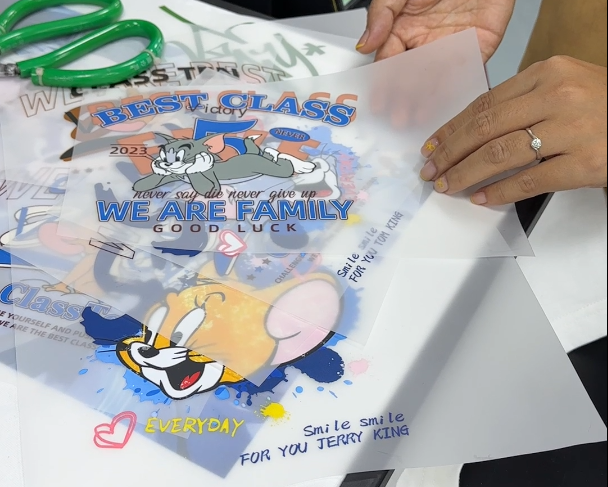 Here is a common industry example: small chest logo. After optimized layout, base consumables (ink + film + powder) are $0.055. With 10% wastage, consumable cost becomes $0.061. Allocated electricity: $0.004, labor: $0.029, depreciation & maintenance: $0.017, overhead: $0.007. The transfer print costs around $0.118. Adding a blank T-shirt at $0.72, the total finished T-shirt cost is about $0.838.Key factors affecting cost: print size, white ink coverage rate, layout utilization, order volume, consumable quality and machine stability. Large repeated orders with tight layout greatly reduce unit cost. Small orders or full-print designs with heavy white ink will push up the cost sharply. You can effectively control DTF printing cost by optimizing layout in RIP software, improving powder recycling and maintaining printheads regularly to reduce clogging.Once you master this calculation method, you can get accurate cost for POD one-piece orders or bulk orders. It helps you set reasonable quotation ranges and avoid risky orders to keep your print shop profitable.